Living Systems in Motion

Today we dive into agent-based models of tissue growth and repair, where individual cells become decision‑making agents whose simple local rules produce realistic growth, scarring, and regeneration. Expect clear explanations, vivid examples, and invitations to explore, question, and build alongside us. By the end, you will feel ready to test ideas, compare strategies, and transform biological intuition into executable, shareable simulations.

Cellular Rules That Spark Healing

Imagine each cell following a handful of biologically grounded rules—when to divide, migrate, rest, or die—while sensing neighbors, matrix, and signals. From these interactions emerge colonies, patterns, and scars that surprise and teach, capturing healing trajectories no equation-based approach alone can easily reproduce.

Behaviors, States, and Decisions

Represent cells with explicit states like proliferative, quiescent, senescent, apoptotic, and differentiated, and let transitions depend on nutrients, crowding, and stress. Encode phenotypes such as migration persistence, traction strength, and secretion rates to reveal how microscopic decisions accumulate into visible tissue architecture and repair speed.

Neighborhoods and Signals

Local neighborhoods carry the story: adhesion competes with repulsion, chemotaxis follows cytokine gradients, and contact inhibition redirects trajectories. Include paracrine loops among fibroblasts, macrophages, and stem cells, and you will watch niches self‑organize while wounds close, reopen, or stabilize as resilient, imperfect scars.

From Bench Notes to Simulation Code

Start with curated experimental notes and literature values, then translate mechanisms into code with traceable assumptions and units. Map biological processes to modular components, so collaborators can swap hypotheses quickly, rerun scenarios, and compare outputs to microscopy, transcriptomics, and mechanical measurements without losing transparency.

01

Defining Agents and Microenvironments

Define cell classes, progenitors, immune actors, and endothelial agents, plus a microenvironment carrying oxygen, growth factors, and drugs. Couple them through grids or meshes, and include boundaries, implants, or sutures. This scaffolding supports realistic interactions while remaining flexible for future discoveries and interventions.

02

Encoding Mechanics and Constraints

Encode mechanics with simple but revealing laws: persistence‑biased random walks, force‑balance adhesion, volume exclusion, and traction on deformable matrix. Add constraints from collagen fiber alignment or substrate stiffness, and observe migration modes switch, clumps disperse, or fronts slow as loads and geometry change.

03

Choosing Scales and Timesteps

Choose spatial resolution to match the biology—subcellular for protrusions, cellular for neighborhoods, or tissue‑scale for organ dynamics—and pick timesteps that respect diffusion and division rates. Multiscale couplings bridge processes elegantly, preventing artifacts while preserving speed for extensive parameter sweeps and ensemble predictions.

Vessels, Oxygen, and the Matrix in Motion
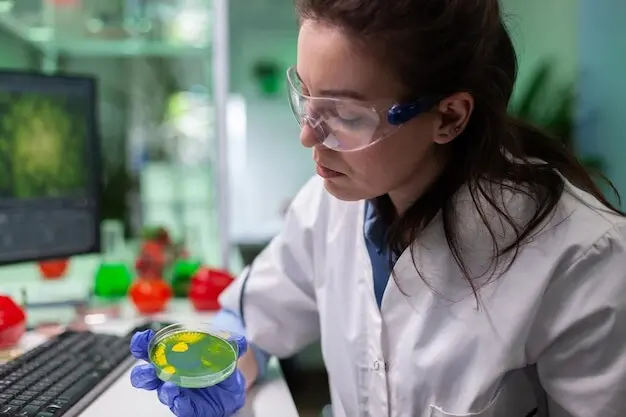
Healing hinges on supply lines and structure. Couple sprouting angiogenesis to tip‑cell guidance cues, simulate oxygen diffusion and consumption, and allow extracellular matrix to stiffen, relax, and realign. Feedback between vessels, gradients, and fibers redirects migration, reprograms fates, and decides whether regeneration outpaces fibrosis.

Angiogenic Sprouts and Guidance Cues

Model tip and stalk identities, VEGF gradients, and anastomosis while enforcing lumen stability. Competition among sprouts, pericyte recruitment, and shear‑dependent pruning deliver realistic networks that feed growth yet avoid chaotic over‑vascularization, enabling tissues to mature, remodel, and withstand metabolic or inflammatory stressors.

Diffusion, Consumption, and Hypoxia

Represent diffusion with discretized PDEs or lattice‑Boltzmann approximations, accounting for consumption by active cells and replenishment from vessels. Hypoxia thresholds trigger HIF signaling, angiogenic factors, and phenotype shifts that either rescue threatened regions or lock tissue into maladaptive, inflammation‑sustained plateaus.

ECM Remodeling and Mechanical Feedback

ECM molecules crosslink, degrade, and reassemble under cell‑generated forces. Let fibroblasts deposit collagen while matrix metalloproteinases cut paths for immune and progenitor cells. Mechanical feedback steers fate choices, deciding whether scars contract into stiff barriers or remodel into functional, load‑bearing structures.

Stories From Virtual Wounds and Fractures

Virtual experiments illuminate possibilities without risking patients. Recreate wounds, fractures, and resections, then vary timing, dosing, or mechanics to reveal nonintuitive tradeoffs. Along the way, personal lab episodes and published case studies show how simulation‑guided hypotheses refined protocols, reduced failures, and inspired new measurements.

A Skin Wound That Finally Closed

In one collaboration, a nonhealing skin ulcer stubbornly cycled inflammation. The model predicted that shifting macrophage polarization two days earlier would shorten closure by a week. A small pilot adjusted dressing schedules and cytokine delivery, and photographs documented steadier granulation and fewer reinfections.

Simulating Callus Formation in Bone

Fracture repair depends on callus geometry, oxygen, and motion. Simulations suggested controlled micromotion preserved vascular ingrowth while avoiding shear‑induced nonunion. Surgeons tested dynamization strategies in difficult cases, observed improved bridging patterns on radiographs, and reported fewer returns to theater for revision fixation.

Liver Regrowth After Resection

Partial hepatectomy models captured proliferation waves constrained by perfusion and bile canaliculi remodeling. Parameter sweeps indicated that transient ECM softening widened regenerative fronts. Follow‑up imaging with elastography supported the prediction, helping teams tune growth‑factor timing in animal protocols to reduce aberrant nodules.

Measuring, Calibrating, and Trusting Predictions
Sensitivity and Uncertainty You Can Explain

Compute global sensitivity indices to rank drivers of closure time, scar thickness, or vessel density. Present tornado charts and response surfaces colleagues can read, clarifying which levers matter and where additional measurements will collapse uncertainty and reveal actionable control points.

Fitting Microscopy Lineages and Tracks

Segment time‑lapse microscopy to extract trajectories, divisions, and contacts, then fit motility, cycle, and interaction parameters. Compare simulated kymographs, lineage branching, and neighborhood statistics with ground truth, iterating until discrepancies shrink and explanations for residual deviations motivate targeted experiments.

Validating Against Independent Experiments

Hold out datasets, change initial conditions, and test predictions under unseen perturbations. Validate qualitative patterns and quantitative metrics, document failures openly, and convert surprises into refined mechanisms, keeping the model honest and trustworthy for decision support and collaborative exploration.

Speed, Sharing, and Real-World Impact

Practical adoption needs speed, clarity, and access. Leverage GPUs or spatial partitioning to scale agents, containerize code and data for reproducibility, and share notebooks, interactive dashboards, and preprints. Invite peers to critique, extend, and reuse, accelerating discovery while respecting constraints and credit.

Parallelism Without Pain

Parallelize neighborhood queries, batch state updates, and offload diffusion to GPUs. Event‑driven schedulers and sparse data structures maintain responsiveness as millions of agents interact. These engineering steps keep exploratory work fluid, enabling broad sweeps that uncover resilient interventions rather than brittle, overfit tricks.

Reproducible Pipelines People Can Rerun

Pin versions, capture seeds, and archive results with metadata so colleagues can rerun every figure. Provide scripts, containers, and small example datasets, lowering barriers for teaching and review. Transparent pipelines convert skepticism into collaboration, saving time otherwise lost to guesswork and missing details.

Join the Conversation and Shape the Future

Tell us what puzzles you, which healing contexts you care about, and what data you can share. Subscribe for upcoming deep dives, propose collaborations, or request tutorials. Your questions will steer experiments and code, shaping better tools that matter at the bedside and bench.

Palovaronexoviromexo
Privacy Overview

This website uses cookies so that we can provide you with the best user experience possible. Cookie information is stored in your browser and performs functions such as recognising you when you return to our website and helping our team to understand which sections of the website you find most interesting and useful.